The late Lou Reed, discussing his 1972 Transformer second solo album, was one of the most formative interviews in my career, precisely because his unvarnished directness and honesty made it so challenging. I could not help but notice that, in his role as host/inteviewer on the syndicated television series Spectacle, Elvis Costello was obviously star-struck when interviewing Lou Reed who, along with John Cale, co-founded the Velvet Underground. As a songwriter, Costello knows all too well that without Lou Reed, there would have been no Glam Rock, no Punk Rock, no New Wave, no Alternative Rock, no future for the Sex Pistols’ Johnny Rotten even to sing “No future…”
Part one begins with the pioneering Velvet Underground debut and its far-reaching influence, confirmed here by an amusing story from one David Jones, who was living in London an ocean apart from Reed and the Velvets. After hearing an unreleased VU acetate, young Jones changed his name to David Bowie, started a band, and began wearing a dress. Lou Reed focuses on his second post-Velvet Underground album containing the Top 20 alterna-hit “Walk on the Wild Side”. Rolling Stone magazine writers rank Transformer at #109 now on their Top 500 All Time list. And finally Lou, the New York City Man himself, was invited in from the “Dirty Boulevard” to be inducted into the Rock and Roll Hall of Fame, posthumously. –Redbeard
Of all the albums on 2022’s impressive golden anniversary list, Can’t Buy a Thrill from unsung song peddlers Donald Fagen and Walter Becker of Steely Dan may be one of the most evergreen. When I casually run the list in my head of the most significant debut albums in rock history (The Doors, Are You Experienced, Please Please Me, Van Halen, Led Zeppelin 1, Boston, Chicago Transit Authority, Appetite for Destruction, My Generation, Never Mind the Bollocks, Mr Tambourine Man, The Ramones) invariably I forget to include Can’t Buy a Thrill in November 1972 from Steely Dan. This first varied assortment of smart, (“subversive”, Donald Fagan told me) pop from the songwriters Donald Fagen and Walter Becker sounds the least like any Steely Dan album which would follow, but there are some very clear reasons why.
Steely Dan duo singer/keyboard player Donald Fagen and the late guitarist Walter Becker recall their humble beginnings at Bard College, then being stranded a continent away in Los Angeles expected to write pop hits for others, before concluding that no one else could interpret their quirky, dark sense of lyrical humor with jazz-informed arrangements.( The late Walter Becker (L) with Donald Fagen of Steely Dan )
At that time in November 1972 I had no knowledge that the band’s name came from a dildo which William Burroughs had personified in Naked Lunch, nor did I realize that their debut album’s title Can’t Buy a Thrill had been lifted lock, stock, and Zimmerman from Bob Dylan’s “It Takes a Lot to Laugh, It Takes a Train to Cry” off of Highway 61 Revisited. What was obvious, though, was that the two initial singles from Can’t Buy a Thrill, “Do It Again” and “Reelin’ in the Years”, were some of the most inventive pop rock to liven up Top 40 playlists in years, and the subsequent Steely Dan debut in Autumn 1972 declared this baby band full term on delivery. Bringing the songs of New York college buddies Donald Fagen and Walter Becker to life included guitarists Denny Dias and Jeff “Skunk” Baxter, plus singer David Palmer and singing drummer Jim Hodder on album tracks “Dirty Work” and “Midnight Cruiser”, respectively. Yet it was the distinctive vocals of stage-shy Donald Fagen on the hits “Do It Again” (Billboard #6) and “Reelin’ in the Years” (Billboard #11), plus the tasty jazz-inflected “Fire in the Hole”, that quickly settled the Steely Dan “quarterback controversy” after just the first album, which Rolling Stone magazine ranks at #238 on their “Top 500 Albums of All Time”. In early September 2017 Steely Dan co-founder/ guitarist Walter Becker passed away from esophageal cancer. Walter Becker was 67.Rivaled only by The Eagles first album that same year, Steely Dan’s debut Can’t Buy a Thrill has to be on any serious list of most successful first efforts by an American band. With two Top Ten hits from their first time up to bat, “Do It Again”and “Reeling in the Years”, Steely Dan’s calling card of smart, sophisticated pop/rock actually made American Top 40 radio compelling in 1972.
In early September 2017 Steely Dan co-founder/ guitarist Walter Becker passed away from esophageal cancer. Walter Becker was 67. Donald Fagen hosts the fiftieth anniversary of Steely Dan Can’t Buy a Thrill here In the Studio, with archival insights from Walter Becker. –Redbeard
To borrow fromWhen Harry Met Sally, the Rob Reiner/Billy Crystal/Meg Ryan hit movie of that day, George Harrison’s Cloud Nine comeback album could alternately be titled “When Harri(son) Met Lynne”. You see, by 1987 Jeff Lynne had ceased to make neo-Beatles-influenced music with Electric Light Orchestra/ELO, while ex-Beatle Harrison simply had stopped making music, period. After a series of very public well-intentioned but ill-fated charity causes (the Concert for Bangla Desh cost George $2.25 million in personal tax- no good deed goes unpunished), business lawsuits, scathing British press attacks, boring critical reviews and diminishing album sales, Harrison mercifully left the music business for five years, instead making Monty Python movies with his Handmade Films and tending to his garden at Friar Park.
But according to what the late Tom Petty told me, in October 1987 there they were, the ex-Beatle and the ELO exile, George Harrison and Jeff Lynne, all beaming smiles backstage, first in Birmingham England and then again in London’s Wembley Arena when Petty and the Heartbreakers toured the UK as Bob Dylan’s band. “George Harrison had given me his unreleased Cloud Ninealbum, it was just about to come out,” Petty told me. “He had given me a cassette of it, & when I got home (to Los Angeles) I put it on and thought,’Man, this is amazing! The sound and the songs and everything, Lord this sounds good, and original, and different. Man, that Jeff Lynne just blows my mind.’ I was playing it all Thanksgiving Day 1987.”
Later that Thanksgiving day Petty would find himself stopped at a traffic light, only to spy none other than Jeff Lynne sitting in the car next to his. Coincidence? Fate? Urban planning? We’ll never really know for sure, but of this we are certain: George Harrison’s Cloud Nineset off a musical chain reaction which would revitalize not only the Quiet Beatle’s music career, but result directly in Petty’s Full Moon Fever, Roy Orbison’s Mystery Girl, and spawn the supergroup the Traveling Wilburys. – Redbeard
By the time of Summer 1968 and their third album’s release Wheels of Fire, London-based trio Cream had quickly earned their dual reputations as 1) makers of artsy psychedelic records which fused jazz, blues, and rock’n’roll, with 2) an equally enviable benchmark as the most powerful live act in concert for its time. Cream’s breakthrough album Disraeli Gears only nine months earlier tee’d up the English/Scottish trio’s June 1968 third release, Wheels of Fire, for some impressive numbers. It went almost immediately to #3 sales in the UK and a bonafide #1 in the US, becoming the first double album to sell over a million copies.
Though Rolling Stone magazine ranked Cream’s Disraeli Gears most recently at #170 album of all time, and the late Ginger Baker as one of rock’s three greatest drummers (along with The Who’s Keith Moon and Led Zeppelin’s John Bonham), the other key numbers for Cream’s quicksilver career are startlingly single digits: years together- 3 ; albums released- 4; number of reunion albums/tours in the half century since – 1.At the time, nothing sounded quite like the songs on Disraeli Gears and Wheels of Fire: “Strange Brew”,”Sunshine of Your Love” (rivaled only by “Purple Haze” that same year as the most subversive single to ever penetrate Top 40 radio ), the elegant romantic falsetto of “Dance the Night Away”, and the psychedelic lyrics of “Tales of Brave Ulysses” absolutely mesmerized me with each repeated playing. That went double (pun intended) for Wheels of Fire less than a year later, which included “White Room”, “Born Under a Bad Sign”, “Those Were the Days”, and two live performances, Robert Johnson’s “Crossroads” sung by Eric Clapton, & the epic extended jam around Willie Dixon’s “Spoonful”. Wheels of Fire also resides on Rolling Stone‘s Top 500 list, at #205.
When I talked to Eddie Van Halen, Gary Rossington of Lynyrd Skynyrd, Geddy Lee and Alex Lifeson of Rush, Sammy Hagar and Joe Satriani, or guitar phenom Eric Johnson, they and countless other musicians easily cite Cream as the gold standard which inspired them all to make the transition from rock music fan to rock musician. The degree to which my guests Eric Clapton and Jack Bruce (who passed 2014), along with the late Ginger Baker as Cream, influenced multiple generations of bands is incalculable. Jack Bruce, Ginger Baker, and frequent lyrics contributor Pete Brown are all gone now, leaving Eric Clapton as the sole spoonful of Cream left.-Redbeard
(Copyright 2023 In the Studio. All rights reserved)
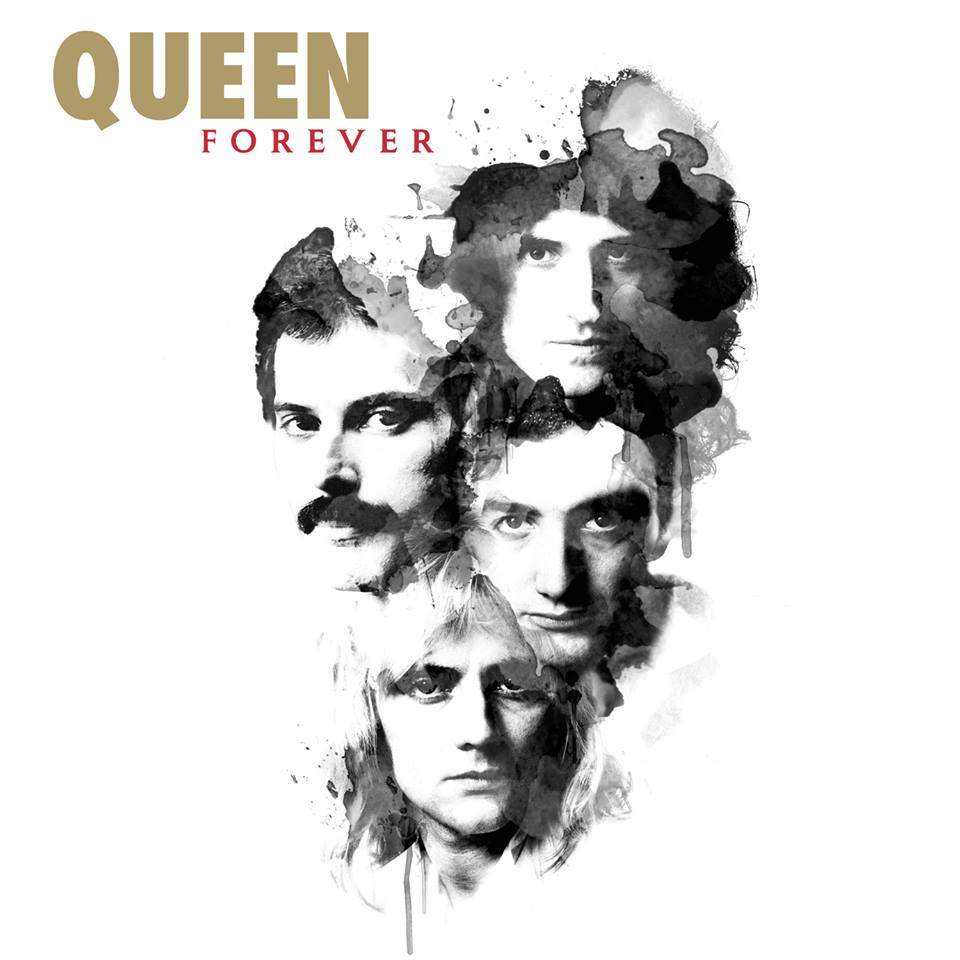
With the October 1977 release of News of the World, London-based Queen moved into the upper echelons of international rock bands, with arena-filling (soon to be stadium-sized) anthems “We Will Rock You” and “We Are the Champions”. But my guest, Queen guitarist/composer Brian May, reminds us that News of the World also contains “Spread Your Wings”,”Get Down, Make Love”, and the under-appreciated mini-opera, “It’s Late” as well. Astrophysicist Dr. Brian May, PhD (!) is my guest here In the Studio sharing Queen’s breaking News of the World.
As I was preparing the accurate context of Queen’s place in the rock constellation upon the release of November 1977’s News of the World, I stumbled upon another website’s contention that, “In the autumn of 1977, it looked as if Queen’s reign might be over… The future of their sixth studio album, News Of The World, looked bleak at best…”. WTF? At least in America, nothing could have been further from the truth. With the release of November 1977’s News of the World , Queen had succeeded as four real “mates” on an international scale, which would continue only to increase for the next decade. With four writers and vocalists, the band had a surplus of strong songs, while Queen lead singer Freddie Mercury possessed such an operatic voice that it’s easy to forget that both Brian May and drummer Roger Taylor also sang lead on select songs. (Freddie Mercury of Queen, from the Neal Preston book Exhausted and Exhilarated)
What really impressed me then and now is how appreciative Brian May is of the fans, the countless deejays, and journalists for supporting Queen’s efforts over the years. Brian would later suffer a broken marriage, separation of his kids, and the passing of both parents, but nothing short of the untimely death of Freddie Mercury in 1991 could silence the original band. And even that wasn’t permanent. –Redbeard
To give you an idea of how big an album the fifth one from Kansas, Point of Know Return, was: my first arena show after moving to Memphis in August 1978 saw the band playing to a sold-out audience on a non-stop tour, nearly a year after the album’s October 1977 release! And coming on the heels of the Kansas breakout effort Leftoverture only a year earlier, Point of Know Return was easily its equal, containing “Paradox”, “Portrait(He Knew)”, “Sparks of the Tempest”, the soaring epic “Closet Chronicles”, “Nobody’s Home”, “Point of Know Return”, and Kerry Livgren’s truly legendary “Dust in the Wind”.
With back-to-back quadruple platinum albums Leftoverturein 1976 andPoint of Know Return barely eighteen months later, the band Kansas was assured of permanent statehood in rock history. Formed organically as a” band of brothers” in Topeka, over the course of almost five decades Kansas has proven to be bound together as much by shared struggle as by shared success. Having sold over thirty million albums since their 1974 debut, that’s impressive.
Kansas original band members Kerry Livgren, Phil Ehart, Steve Walsh, Dave Hope, Richard Williams, and Robbie Steinhardt shared a dream and honed their tight sweeping sound 1500 miles away from the American music business hubs of New York, Los Angeles, and Nashville, but band co-founder and ex-guitarist/keyboard player/songwriter Kerry Livgren told me In the Studio that the members of Kansas studied the leading British progressive rock bands as if their lives depended on it.
“Being from Topeka KS, just because it’s surrounded by wheat farmers in the Midwest, didn’t mean that we weren’t exposed to every kind of music,” Livgren reminds us. “You could live in Cody WY and go in a record store there and buy the same records as someone in New York City. People assumed that because we were from Kansas that we should be a fiddle band or something. We heard all kinds of British rock, from Cream to King Crimson.”Drummer Phil Ehart recalls those early pre-“Wayward Son” days. “We were all poor as church mice. Nobody had a nickel to their name. We all lived in a ‘band house’, and every dime we made went back into the band and keeping our bass player Dave in cigarettes!” Kerry Livgren concurs.” In 1970 for the year I made five bucks. That’s below any poverty level I know of.”
It would take Kansas no less than four trips to the plate before they would touch all the bases with their 1976 Leftoverture release, but even after selling four million copies, many rock critics continued to dismiss the band even though most couldn’t have found Topeka with a map. “The fact that we were an American band which emulated a lot of the progressive rock from England bugged a lot of American music critics,” Livgren explains in this classic rock interview. “They thought, ‘You shouldn’t sound like that if you come from Kansas’! Apparently real people didn’t seem to care, ’cause we sold millions of records anyway (with the next Kansas album in 1977, Point of Know Return).”
This edition of In the Studio features a rare reunion of my guests Kerry Livgren and Steve Walsh with current Kansas members Phil Ehart and Richard Williams, and is dedicated to original violinist/singer Robbie Steinhardt who passed away in July 2021. –Redbeard
It just does not seem possible that Kick by INXS is forty, and that goes double after you listen to the breathtaking remastered Atmos multi-channel version. Keyboard player/songwriter Andrew Farriss is joined by multi-instrumentalist Kirk Pengilly and guitarist Tim Farriss here In the Studio to share the backstory behind “New Sensation”, “Devil Inside”,”Never Tear Us Apart”,”Need You Tonight”, and the stunning “Kick” title song. Also we share my interviews with the mercurial late INXS singer/lyricist Michael Hutchence about the international blockbuster Kick.
With the focus each week In the Studio on getting the stories behind history’s greatest rock albums, we write and talk about the best days of the best bands, so by definition it is usually a positive experience. Since the Fall 1987, and building on the breakthrough Listen Like Thieves two years earlier, the INXS album Kick is not only one of the biggest sellers of the entire 1980s decade (estimated at more than six million in the U.S. alone), but highly acclaimed to boot ( a bullish four Top Ten U.S. singles including “New Sensation”,”Devil Inside”,”Never Tear Us Apart”, & the #1 “Need You Tonight”). And with five MTV Video Music awards, what’s not to love? Yet as my interviews with keyboard player/songwriter Andrew Farriss, older brother lead guitarist Tim Farriss, sax player/rhythm guitarist Kirk Pengilly, and archival interviews with lead singer/songwriter Michael Hutchence were all being integrated for this INXS rockumentary with the surprisingly timeless joyous musical performances on Kick, it was impossible to ignore a sense of melancholy that I just could not shake.
The sense of emotional whiplash is quite understandable, really, because to revel in the peak of this literal band of brothers Tim, Andrew, and drummer Jon Farriss from the remote (even by Australian standards) city of Perth is to look unblinkingly at just how much they, and we, lost with the death by misadventure of Michael Hutchence. The only bigger tragedy would be if the world simply forgot altogether. – Redbeard
</em
“Automatic for the Peopledidn’t sell as many as Out of Time,” R.E.M. guitarist/songwriter Peter Buck reminds us. “Out of Time sold ten million copies and Automatic… only sold eight million.”
Only?
“It was substantially an uncommercial record,” Buck insists here In the Studio regarding 1992’s Automatic for the People. “Except for the fact that it was us, if that had been a band’s first record, it wouldn’t have gotten on the radio at all.”
Point taken. Yet at the time of the October 1992 release of R.E.M.’s eighth studio album, three songs from Automatic… WEREon the radio, a lot, and deservedly so, including “Drive”, “Man on the Moon”, and the tender yet powerful international hit, “Everybody Hurts”. The original four-piece was climbing rapidly to be one of the most popular bands in the world, and the stats are unequivocal: peaking at #2 Billboard Albums Sales in the US, #1 in the UK; third on the Village Voice year-end critics poll; nominated for Album of the Year at the Grammy Awards in 1994; ranked at #18 by Rolling Stone on its “100 Greatest Albums of the ’90s” list, and an impressive #96 on their latest “500 Greatest Albums of All Time”.
R.E.M. singer/lyricist Michael Stipe, multi-instrumentalist/singer Mike Mills, and guitarist/songwriter Peter Buck all convene with me here In the Studio marking the thirtieth anniversary of Automatic for the People by R.E.M., estimated now to have sold 18,000,000 copies worldwide. –Redbeard
Billy Joel is certainly no The Stranger to spectacular popularity, or the record books documenting same. OK, pop quiz: who is runner-up to Elvis Presley as the top album seller singer in America? It’s Billy Joel, the unofficial mayor of New York City who, unlike Zohran Mamdani, is not term-limited but holds that distinction for life. Rolling Stone magazine bestowed the ranking of #67 on The Stranger on its vaunted Top 500 Albums of All Time list.
It’s not as if Billy Joel had not been a prolific recording singer/songwriter, or an infrequent touring musician prior to his fifth album The Stranger, released in Fall 1977. Joel had actually come to national attention as early as his second album Piano Man, when the title song became a mid-chart hit, and had pockets of popularity after releasing the deserving Turnstiles, containing the soon-to-be-standard “New York State of Mind”, in early 1976. But strangely, his album sales were in a decidedly negative trend after Piano Man. With a superb band and veteran producer Phil Ramone in his corner, Billy Joel’s The Stranger changed all of that, permanently. With the stories behind “Just the Way You Are”,”Movin’ Out”,”Only the Good Die Young”, “Scenes from an Italian Restaurant”, and the title song, Billy Joel joins me In the Studio Superstar musicians in that rarefied league (and many more only pretenders to it ) almost always surround themselves with gaggles of managers, “minders”, assistants, agents, and promoters , and the size of the entourage doubles when they’re on tour. ( Billy Joel (L) with the late producer Phil Ramone )
So imagine my surprise when Billy Joel arrived, like The Stranger personified, for our scheduled interview at my Orlando hotel room door at the decidedly unhip hour of 9 a.m. on a Sunday morning – completely alone. Billy had played to a sold-out audience of 15,000 only 12 hours earlier, but now here he stood before me without security guard or tour manager, dressed in an old navy-blue t-shirt, matching shorts , and well-worn canvas deck shoes, just another schlep tourist whose kid wanted to meet a real celebrity. Like Mickey Mouse, for instance. What ensued was, for me, a delightful conversation, two guys who had never met, from different parts of America, just shooting the breeze about mutual loves. Sure, we talked rock’n’roll, from Billy Joel seeing the Beatles perform on the Ed Sullivan Show to British Invasion bands that followed, garage rock , and the New York City punk scene that influenced his approach on the 1980 Glass Housesalbum. But in this lively classic rock interview, we also talked at length about baseball (he was a Brooklyn Dodgers fan until they moved to L.A. in 1958, when he switched to the Yankees); Harley Davidson Cafe Sportsters ; the motorcycle accident which almost cost Billy Joel his hands, his career, and his life ; and the break-up of his marriage to his former manager, even while her brother managed Joel’s career amidst claims of impropriety. The only thing Billy Joel claimed that he did not want to discuss that morning was his Fall 1977 blockbuster breakout The Stranger, a bit of a change-up pitch for me since that monumental album ( it knocked the iconic Simon and Garfunkel’sBridge Over Troubled Water out as the top-seller in Columbia Records long storied history) was one of the primary reasons I was there. But I wisely took the pitch rather than line driving it back at Joel, him fiercely independent & a card-carrying contrarian, with me figuring that this engaging conversationalist with the unpretentious attitude would be obliged to get around to discussing the 10 million-plus seller The Stranger at some point. And as you hear in this classic rock interview, I was right.
And you also get to hear from Billy Joel’s producer of The Stranger, the legendary Phil Ramone, with 34 Grammy nominations one of the most acclaimed technicians in music history, who sadly passed away in March 2013. Hear the entire Phil Ramone interview here. With the stories behind “Just the Way You Are”,”Movin’ Out”,”Only the Good Die Young”, “Scenes from an Italian Restaurant”, and the title song, Billy Joel joins me In the Studio –Redbeard
Upon its September 1977 release, Steely Dan’s Aja simply stood apart, from the sleek limousine-black cover to its mysterious title, to its impeccable sound, and its musical cast of the best jazz and rock musicians extant. And over the four and a half decades since, time has done nothing to diminish its impact and stature as one of the greatest albums of the last half of the 20th century. Donald Fagen is my guest, along with my archival interview with the late guitarist/composer Walter Becker, for the inside story of “Black Cow”,”Josie”,”Peg”,”Deacon Blues”,”Home at Last”, and the sublime “Aja”.
“When you’re out on the stage performing, you’re in ‘show business’,” the late Steely Dan co-founding guitarist Walter Becker reminded us in my classic rock interview, “and Donald (Fagen) and I never wanted to be in ‘show business’. We wanted to be musicians and play music.” Fagen asserted that, by the time of Steely Dan’s Aja release in Fall 1977, their intentions were much more high-minded than subversive. “We wanted to expand the vocabulary of Pop music.”
The record certainly supports the conclusion of mission accomplished in support of that goal, beginning with Steely Dan’s initial Can’t Buy a Thrill in 1972 (criminally omitted from Best Debut Album lists); the tasty, more adventuresome followup Countdown to Ecstasy; the uneven Pretzel Logic; the musical bridge to future glory,Katy Lied in 1975, arguably the equal to Aja in almost every way, and possibly the strongest set of songs since the debut; the dark shadowy return to their native Big Apple in decay, The Royal Scam in 1976; and the timeless jewel at the intersection of Rock and Jazz Fusion on Aja the following year.
But don’t expect our heroes to take a bow, not then and not since. “Self-loathing is really our specialty,” deadpanned Donald Fagen with a verbal rimshot. Those two purveyors of progressive pop, rock, and jazz in Steely Dan, singer/piano player Fagen and the late guitarist Walter Becker, discussed Aja, such a high water mark in latter day 20th century music that Rolling Stone magazine ranks Aja at #145 on their Top 500 Albums of All Time. Hear the stories behind of such perennials as “Black Cow”,”Deacon Blues”,”Peg”,”Home at Last” ( inspired by Homer’s The Odyssey), the great groove on “Josie”, and the dizzying title song, nailed in one take! –Redbeard