Category: Beard’s Blog

  • Asia- Carl Palmer, Geoff Downes, the late John Wetton

    Asia- Carl Palmer, Geoff Downes, the late John Wetton

    Asia was the 1980s’ first “supergroup”, including (from left) Emerson Lake and Palmer drummer Carl Palmer, former King Crimson/Roxy Music /UK singer/ bass player the late John Wetton, Buggles vid-kid Geoff Downes on keyboards, and YES virtuoso guitarist Steve Howe. Their March  1982 debut rose to #1 in America on both the album sales  and  singles charts for “Heat of the Moment”, plus additional hits “Only Time Will Tell”, “Wildest Dreams”, “Sole Survivor”, and “Here Comes the Feeling”. At year’s end when the figures were tabulated, Asia‘s nine weeks at #1 contributed continental-sized sales, which resulted in it being the #1 seller for the year 1982!

    Asia debut sales have exceeded four million in the US, with worldwide estimates close to ten million. Palmer, Downes, and Wetton (who died at the end of January 2017 ) joined me In the Studio to admit that none of them imagined that sort of reception in their “wildest dreams”.- Redbeard 

  • Foreigner- Mick Jones, Lou Gramm

    Foreigner- Mick Jones, Lou Gramm

    This one was a “sleeper”, as the debut album by the new group Foreigner came out in March 1977 without any fanfare. Rock nerds like me recognized guitarist/co-writer Mick Jones’ name from the English blues/rock band Spooky Tooth, but that had almost no resonance in the US. There was ex-King Crimson multi-instrumentalist co-founder Ian McDonald, and the singer Louis Grammatico had caught my ear as a Paul Rodgers sound-alike from a short-lived Rochester band, Black Sheep. But the whole of Foreigner clearly was much greater than the sum of its parts, upon release rapidly becoming the biggest-selling debut album by any band in the history of estimable Atlantic Records…including Led Zeppelin.

    Foreigner founder Mick Jones and original singer/co-writer Lou Gramm join me here In the Studio for realization of their collective dream in the stories behind the songs “Cold As Ice”, “Headknocker”, “Starrider”,”Long Long Way from Home”,”At War with the World”, and the time-less “Feels Like the First Time”. Most of the top-selling debut album covers from rock’s first half century, including Boston, Led Zeppelin, The Band, Men At Work, and Hootie and the Blowfish, all share an obvious commonality of design in that each one looks…well… cheap. Record companies, in their plantation model business relationships, have always charged  album cover costs of photography, artwork, and graphic design back to the recording artist, so a first-time recording artist has no economic incentive to, in essence, borrow money to splurge on their initial album cover. This indentured servitude was applied equally to all, including this week’s guest Mick Jones, then a veteran of British minor bluesrockers Spooky Tooth, when Jones signed his new band Foreigner for their initial foray in March 1977. Atlantic Records showed their support and confidence in Jones’ new outfit by letting what appeared to be a middle schooler with paint-by-number water colors do the cover art.

    Long after the ensuing debut release Foreigner, containing such big hits as “Feels Like the First Time” and “Cold As Ice”, became the fastest-selling debut album in Atlantic Records’ long storied history, the remastered music has continued to be wrapped in that original artistic austerity. Now fans have even taken to employing the latest computer re-tinting in an attempt to enhance the original Foreigner  cover, but you know the old adage regarding the futility of conjuring a silk purse from a sow’s ear: in this case, it’s just lipstick on a pig.

    But then again, looking at these covers of  top-selling debuts , there is indeed a sense of innocence and humility in all of them that can never be recaptured. Dedicated to Foreigner co-founder Ian McDonald who passed away in early February 2022. –Redbeard

  • U2- The Joshua Tree- Bono, The Edge

    U2- The Joshua Tree- Bono, The Edge

    U2’s The Joshua Tree, the 1987 Grammy Album of the Year, was as complete a musical statement as anything released in the Eighties. In 1980 the Dublin quartet became apparent with the song “I Will Follow” from their debut, Boy. With their third, War in early 1983, U2 became significant to a growing international fan base horrified by the senseless sectarian slaughter of innocents in the band’s native Ireland. With the anthemic song “Pride (In the Name of Love)” in 1984, U2 was elevated to being important musical messengers of change, marked by Summer 1985’s global Live Aid event and the “Conspiracy of Hope Tour” to benefit Amnesty International. Following the release of March 1987’s The Joshua Tree and subsequent world tour, U2 became recognized as the most popular band in the world then. In the Studio Bono and The Edge scan the horizon from their often precarious perch atop rock history.

    As so often is the case, the contradictions to the the highly-touted American Dream may have been identified first by those non-Americans who admired its promise the most, according to U2 singer/lyricist Bono. “We had this love affair with the (American) country, but at the same time we could see that this dream that we’d all bought into was really starting to fray at the edges. And we could see that the Big Ideas of America were being shrunk by the minute. And we could see after Viet Nam (War) and Watergate, and now they were beating up Nicaragua and El Salvador. It was all getting a bit sour,” Bono recalls about the Reagan-era US foreign policy. “And that’s why, for The Joshua Tree,  we chose a desert as that image, because this place that we loved, that’s what it had turned into in the ’80s. Right in the middle of its most successful time on Wall Street when people were shoveling whole countries up their noses and there was this vast material wealth, it seemed like a desert to us.” –Redbeard

  • Jethro Tull- Thick As a Brick- Ian Anderson

    Jethro Tull- Thick As a Brick- Ian Anderson

    Unquestionably and uniquely in a category all its own, Jethro Tull’s 1972 epic Thick As a Brick  is the only album in music history to attain #1 sales on Billboard containing only one song, albeit 43 minutes long! And as you will hear in this classic rock interview with my guest  composer/singer/flautist Ian Anderson, Thick As a Brick‘s ultimate irony  is that the album was conceived by Anderson as a total spoof of music critics purporting to ascribe imaginary meaning to Jethro Tull’s preceding Aqualung   album, as well as a send up of rock’s progressive darlings at the time.

    Redbeard:   As I was going back and researching our many previous conversations about your Jethro Tull body of work, I noticed that you’re very careful never to refer to Thick as a Brick,  the original, as a rock opera.  Why not?

    Ian Anderson: Well, it was a rock rambling, really. It was supposedly a spoof, a parody aspect of the original Jethro Tull Thick As a Brick. But it was supposed to be written by an eight year-old boy, a wannabe poet, who is having, I suppose, slightly beyond his years of rambling pre-puberty moment of gushing forth with  sort of grandiose ideas. And it was a fun thing.  This was the year (1972) of Monty Python, this was a year of the development of quite surreal British humor into an international phenomenon.  So it was quite timely in the sense that this particular album should be a spoof,  a parody, a send-up, a complete fiction into which people quite readily bought,  usually knowingly, but sometimes they didn’t get the joke and took it all absolutely seriously. But for the most part, I think people understood it was a British humor thing.  And my feeling back then was that it was a timely event.  It wouldn’t have worked a year or two earlier or it wouldn’t have worked a year or two later.  Because by then we were into a major change of music culture  in the U.K., particularly as the so-called punk year or two started to come around.  So this was not meant to be a rock opera, it was meant to be the ramblings of a young, precocious mind.  And I never really thought about it as being in any way a parallel perhaps to something like (The Who’s) Tommy  or even having the slightly mysterious (Pink Floyd) Dark Side of the Moon  kind of aura about it.  This was just whimsical light-hearted fun,  although  it had its serious moments embedded in there too.  But no, never a rock opera, just a bit of rambling surreal British humor. RB:     You  told me previously  that Thick as a Brick was conceived as a direct response to many critic’s assertions that Aqualung was a concept album, something that you have consistently denied ever since.  And that the original Jethro Tull #1 seller Thick as a Brick was this clever elaborate send-up of a concept album.  How long did it take you to realize that not everyone got the joke?

    IA: Well, I thought when I wrote the album prior to its release that it would be divided down the middle between those that got the joke immediately, even just reading the album cover,  they would know that there was a joke there.  And that other people wouldn’t immediately get it but most of them would, but not until after they parted with their money and actually bought the thing.  I’m just kidding.  But the reality was I suppose in some countries they never did get the joke, maybe not even to this day.  But I think it was immediately apparent in the U.K., maybe in Australia, maybe in one or two other places, it took a little longer maybe in the USA for some people to realize that it was a parody, it was a spoof and in some places as I suggested like Japan, or in countries that are notorious for a different culture, perhaps the inability to see humor in the same way as most of the rest of us.  But I don’t want to single out the Japanese, let me toss in the Germans, the Swiss and the Austrians as well ! But it maybe just wasn’t in their culture to see that kind of a humor at face value, it took ‘em awhile to figure it out.  If indeed they figured it out at all.  And it was interesting doing the multi-lingual translations of the lyrics of the 2012 Jethro Tull album Thick as a Brick 2, because I was working with Germans, Spanish, Italians, Russians, Czech,  so in a way trying to explain some of the elements of my often wordy and sometimes obscure lyrics…

    RB:     Yeah, good luck with that! IA:       … I did encounter  some deep levels of conflict with culture clash.  Ya know in the sense that it didn’t register, they didn’t have a word, or words to describe a certain thing that we understand, or might easily translate into Italian or Spanish, but the Germans didn’t have a word for it.  So yeah, it was kind of interesting, I think because I deal in words, that’s a big part of what I do, I’m quite fascinated in the semantic confusion that can so easily result and when you think about that , plays out in world politics.  How does ( former German Chancellor) Angela Merkel, who doesn’t speak a huge amount of English, how does she get the nuances of a conversation with the UK Prime Minister  or U.S. President? I mean, there are always a danger that these little elements of language can confuse with even literal translations working, ya know. I’m not suggesting we’re facing World War III, but it’s easy to see how people could get their knickers in a twist.” –Redbeard

  • Todd Rundgren- Something Anything

    Todd Rundgren- Something Anything

    If  like me you hold Rock and Roll Hall of Fame inductee Todd Rundgren’s Something/Anything? in high esteem, you will never be able to  listen to songs such as “Cold Morning Light” in the same way ever again after hearing Todd’s insights in this in-depth conversation. “My biggest songwriting influence up until that time was Laura Nyro, who was also a heavily R&B-influenced artist. So it was all connected to R&B in one way or another.”

    Todd Rundgren’s third solo album  Something/Anything, released March 1972, is an impressively diverse collection of styles, incorporating a dazzling array of pop music influences  in a cascade of twenty-four songs all written by Todd, including tasty power pop (“Hello It’s Me”,”I Saw the Light”,”Couldn’t I Just Tell You” ), sweet soul ballads (“It Wouldn’t Have Made Any Difference”), and flat-out guitar god showcases (“Black Mariah” ). And 75% of the musical arrangements are all played and sung  by Todd Rundgren who, at the time of Something/Anything‘s release in 1972, was a ripe old 23 years of age. Even before the February 1972 release of Rundgren’s third solo album Something/Anything, Todd was being hailed by some rock critics as a wunderkind, that rare combination of left-brain creative and right-brain analytical talents, able to write charming pop lyrics, blessed with an innate ability to play practically any musical instrument, while adept at understanding and utilizing the technical intricacies of the modern recording studio. Something/Anything would have been a monumental achievement under any circumstances, yet Rundgren admits in this classic rock interview to neither reading nor writing music!

    With every development in the technical evolution of music recording, what Todd Rundgren did and the way that he did it entirely on his own, some of it not even in a professional recording studio’s facilities or assisted by technical staff, only serves to continue to elevate this collection.  And now prior to his long-deserving induction into the Rock and Roll Hall of Fame, Todd joins me In The Studio for this #29 charting album which Rolling Stone magazine counts as #173 on its list of the Top 500 Albums of All Time.  – Redbeard

  • Neil Young- Harvest

    Neil Young- Harvest

    Long known for his prodigious recording output, his prolific songwriting, and his unquestionable musical integrity, in February 1972 Neil Young delivered his most popular*  and  perhaps most influential album, Harvest,  to an eager audience who embraced this organic countrified masterpiece. Only Bob Dylan’s groundbreaking Nashville Skyline  three years earlier equals Neil Young’s Harvest  as a touchstone for the whole Americana musical genre.

    *(until sequel Harvest Moon two decades later)

    Young’s first Top Forty hits “Heart of Gold” and “Old Man” pushed Harvest  to the #1-selling album of the entire year 1972, making Neil Young a star and, just as significantly, served as an all-access pass to mainstream success to follow by a long list of singer/songwriters as diverse as Willie Nelson, Waylon Jennings, Jackson Browne, the Nitty Gritty Dirt Band, Charlie Daniels, and the Marshall Tucker Band. And that was just for starters.

    Neil joins me from his tour bus with the late pedal steel guitarist Ben Keith, who met and recorded together in Nashville for these  sessions only to remain lifelong friends, for my classic rock interview about this essential Harvest album. – Redbeard

  • Fleetwood Mac- Rumours- Stevie Nicks, Mick Fleetwood, Lindsey Buckingham

    Fleetwood Mac- Rumours- Stevie Nicks, Mick Fleetwood, Lindsey Buckingham

    When assembling your album shortlist for that Seventies time capsule, better reserve space for the February 1977 release Rumours by Fleetwood Mac. And you can measure its merit any way you choose: quality of songs; sheer number of quality songs; stellar sound production,; musicianship; awards, sales. Holy cow, the worldwide sales are estimated now at 45,000,000 copies!!! Rumours was like a Fleetwood Mac greatest hits album unto itself, with “Second Hand News”,”Dreams”,”Never Going Back Again”,”Don’t Stop”,”Go Your Own Way”…and that’s just side one. Band co-founder Mick Fleetwood, chanteuse Stevie Nicks, and prodigal picker Lindsey Buckingham all join me here In the Studio  for  Fleetwood Mac Rumours.

    When California musical duo (and lovers) Lindsey Buckingham and Stevie Nicks  joined British blues-rock veteran band Fleetwood Mac, their first collaboration in 1975 (their “white album” ) sold more copies than any previous album in the long history of their label. No one was in any way prepared for this new line-up’s stunning initial success, so you can imagine the in-house anticipation for Fleetwood Mac’s next effort.
    They had to wait a full year for it, however, as four of the five members were breaking up literally in the studio while Rumours   was being recorded. Fleetwood Mac co-founder drummer Mick Fleetwood joins Lindsey Buckingham and Stevie Nicks with me In The Studio for one of history’s most popular albums ever at an estimated forty million sold worldwide, an album that Rolling Stone magazine ranks at #25 on their Top 500 All Time list. Thanks to band co-founder Mick Fleetwood himself for providing some musical mirth to perilous times here with how rock’n’roll can adjust to social distancing. “I’d rather be six feet apart than six feet under.” –Redbeard

  • Pink Floyd- Animals- Roger Waters, David Gilmour, Nick Mason

    Pink Floyd- Animals- Roger Waters, David Gilmour, Nick Mason

    How did Pink Floyd devolve from the sublime introspection of Dark Side of the Moon in 1973 to the madness and despair of The Wall six years later? It’s a real zoo In the Studio with Pink Floyd Animals wranglers David Gilmour, Nick Mason, & former member and big-concept composer Roger Waters. Gilmour,  Mason, and  Waters explore the dark, ominous, yet vitally important transitional musical missing link, January 1977’s Animals, an album that was highly anticipated, here in my classic rock interviews. After all, the two Pink Floyd predecessors, Dark Side of the Moon and Wish You Were Here,  were on their way to selling forty million copies, collectively, just in the U.S.

    The original sound of the Animals  disc was as dark and murky as Roger Waters’ vision of humanity, and I must confess that the combination of only three lengthy main songs,”Dogs”, “Pigs”, and “Sheep”, with that thick bass-heavy sonic presentation of the original, kept Animals  off of much of American rock radio then. With the close-mic’ing technique of the musical instruments so popular then, the resultant sound of Animals can be startling today with the latest 21st century remastering, like finding a pristine black pearl perfectly preserved in the muddy bottom of the stream of time.

    With hindsight, it is clear that Pink Floyd’s Animals   and its subsequent tour were the linchpin between the sublime Dark Side…, the melancholy Wish You Were Here,  and the creeping numbing isolation of The Wall   brought on by superstar success. Animals, though, was cynical, agitated, downright venal in places, Roger Waters’ vented emotions frozen in time then without the luxury of The Wall‘s explorations of Waters’ troubled childhood past for context, nor his future for resolution. Listening to Animals  upon its release was the musical equivalent of suddenly coming upon a car crash and being aware immediately that serious trauma had occurred. The listener desperately wants to call for help, but who are we to notify? –Redbeard

  • Sammy Hagar- Standing Hampton

    Sammy Hagar- Standing Hampton

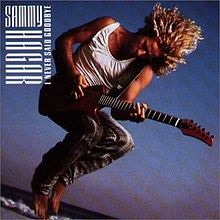
    Like Cheap Trick during the second half of the Seventies, Sammy Hagar had been among the perennial  best support/opening acts in rock during the same period. Hagar became a stalwart under-card name after writing and singing on that first landmark Montrose debut, but never got a title shot until music label owner David Geffen premiered his new label with Sammy Hagar’s Standing Hampton in January 1982 (Geffen’s other initial signing was some piano player named Elton something ,who I understand is still working, if you can believe that). Sammy Hagar joins me here In the Studio to share the stories and some of his best recordings leading up to and including “There’s Only One Way to Rock”, “I’ll Fall in Love Again”, and “Heavy Metal” from Standing Hampton, the pivotal album in Sammy Hagar’s long career.

    With his first two rounds as a rookie co-writing and singing on the first two Montrose albums, things soured quickly between the eager but naive Sammy and the more experienced namesake, the late Ronnie Montrose. Going it alone in a solo career would appear to be the most difficult path that Sammy Hagar could have chosen. But even early on, for Hagar there was only one way to rock.

    “I didn’t have a choice,” Sammy explains here In the Studio. “It’s really funny because I never ever wanted to be a solo artist. I wanted to be the leader, sure, but in a band. I swore then that I would never again play with people I didn’t like.” That early professional lesson shaped his outlook as much as the heartbreaking loss of his father. “My father was a professional boxer, bantamweight, who fought for the title seven times against one of the greatest fighters in history, Manuel Ortiz… If it hadn’t been for him, my father would have been champion.” Clearly Sammy is proud of his father’s stature, learning never to quit, but the son saw how substance abuse could defeat his dad in a way no person ever could.

    “When you see your father at age 53 drink himself to death…He died under a park bench. I swore that would never happen to me. A blind man could see that drugs and alcohol can kill you,” Hagar confides.

    For over four decades, Sammy Hagar has answered the bell and come out swinging: from co-writing and belting out the songs on that first classic Montrose album in 1973, to a decade of undercard matches night after night as a solo bandleader. Finally breaking through to an arena headliner in the mid-Eighties, Hagar got the love/hate job of fronting one of America’s biggest bands then, Van Halen. After a decade of that soap opera, he resumed his solo career without missing a beat, ending up at the top of the New York Times best-seller booklist with his unvarnished autobiography. Here is round one of Sam the Man’s story as told by the “Red Rocker” himself In the Studio.- Redbeard

  • Eddie Money- Can’t Hold Back

    Eddie Money- Can’t Hold Back

    It was just before Christmas 1989, and after almost being permanently paralyzed and unable ever to walk again only seven years earlier, rock’s Mr. No Control  and Where’s the Party, Eddie Money, showed up for our In the Studio interview…with a cooing little baby girl. “Now I’m buying a house out in suburbia,” Eddie Money revealed. “I’m forty years old and I figured it’s time for me to start having some kids, ya know?…I went from a quarter ounce (of cocaine) a day to having babies!” Eddie chuckled.

    Over the years you may have forgotten  just how deep a well of great songs Eddie Money’s 1986 collection Can’t Hold Back is, and how popular the subsequent response to it was. But the tragi-comic back story that it was even made at all, or that Eddie lived to enjoy its success, sounds like the over-active imagination of a pulp fiction writer. But in this In the Studio archive classic rock interview, the late Eddie Money ‘fesses up warts and all while sharing “Take Me Home Tonight”, “I Wanna Go Back”, “Endless Nights”, “One Chance”, and the blistering rocker “We Should Be Sleeping”. Eddie Money’s sojourn with his most popular album Can’t Hold Back took him from the top of the charts in 1986 with “Take Me Home Tonight” back to the hospital where his drug overdose six years earlier had paralyzed his leg. “The first time I heard ‘Take Me Home Tonight’ on the radio, I was doing the dishes in rehab,” Eddie tells us incredulously. “I said to myself, ‘What’s wrong with this picture?’ ” (Eddie Money with Ronnie Spector)

    Can’t Hold Back yielded two more hits, “I Wanna Go Back” peaking at #14 and “Endless Nights” at #21, in addition to “Take Me Home Tonight” reaching #4, all the while the real-life Edward Mahoney torpedoed his marriage, his health, and almost cost him his singing career as well as his freedom. Eddie Money joined me here In the Studio for this often funny, yet at times harrowing, classic rock  interview. We  received word in September 2019 that Eddie Money passed away with stage four esophageal cancer. May God give him a real one-way ticket to heavenly Paradise that never expires. –Redbeard